Army Camouflage: Dynamic Textures for Bold Design
Integrating Army Camouflage into Modern Visual Communication
Army Camouflage is far more than a military uniform pattern; it is a powerful visual language that instantly communicates strength, resilience, and tactical precision in modern graphic design. In a digital landscape crowded with noise, designers are constantly seeking textures and motifs that break through the clutter. Utilizing this distinct pattern allows creatives to evoke a sense of ruggedness and reliability, making it a strategic asset for visual storytelling. When applied thoughtfully, this motif transforms standard layouts into immersive experiences, grounding abstract concepts in a tangible, recognizable aesthetic.
The versatility of Army Camouflage lies in its ability to blend into various design contexts while still making a statement. It serves as a dynamic background that anchors text and imagery, or as a striking accent that draws the eye to key information. For designers building brand identities, this pattern offers a way to signal durability and adventure without using a single word. Whether you are designing for an outdoor apparel company, a fitness brand, or a high-energy tech startup, integrating this texture can significantly elevate the visual hierarchy of your work.
Practical Applications and Strategic Asset Selection
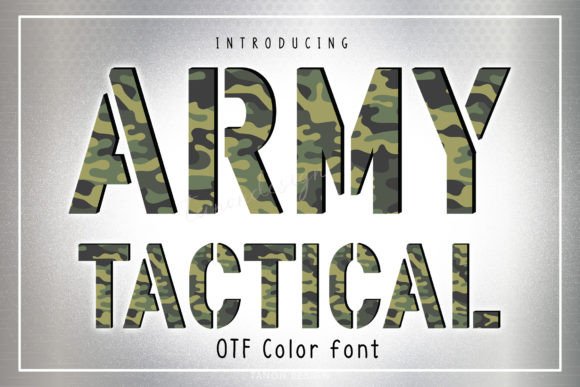
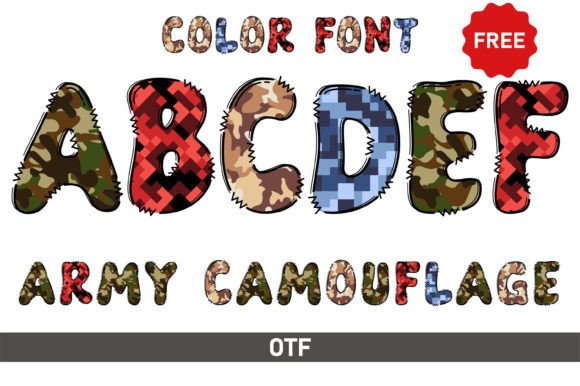
Effective implementation of Army Camouflage requires a strategic approach to asset selection. A critical distinction exists between standard vector files and specialized font assets. For instance, many creative fonts designed with this texture are available in both black and color versions. It is vital to understand software compatibility to maintain a smooth design workflow. While the black version of such fonts is often compatible with cutting machines like Cricut Design Space, the color versions are typically restricted to advanced software such as Adobe Photoshop, Illustrator, Silhouette, and Inkscape. This is because color fonts often utilize specific file structures that cutting machines cannot interpret for layering.
When applying these assets across different mediums, consider the following professional applications to maximize impact:
- Branding and Packaging: Use the texture to create product labels that stand out on shelves, particularly for energy drinks, survival gear, or men’s grooming products.
- Editorial and Web Design: Implement subtle overlays in hero images to add depth to web headers or magazine spreads without overwhelming the visual hierarchy.
- Digital Marketing: Create high-conversion social media graphics where the bold pattern captures attention instantly in fast-scrolling feeds.
- Merchandise and Print: Design custom t-shirts, posters, and invitations where the playful or artistic feel of the pattern adds a unique tactile quality to the final print.
Optimizing Typography and Visual Hierarchy
When pairing Army Camouflage with typography, readability is paramount. Because the pattern is inherently busy and textural, it works best when contrasted with clean, sans-serif fonts or bold, blocky serifs. This contrast ensures that the message remains legible while the background provides context and mood. In UI design, use this pattern sparingly—perhaps in loading screens or footer backgrounds—to avoid visual fatigue. The goal is to use the pattern to enhance the user experience, not hinder it.
Furthermore, selecting the right creative assets involves looking beyond the aesthetic. You must evaluate the scalability of the design. A high-quality vector ensures that the pattern remains crisp whether it is scaled for a billboard or a business card. By prioritizing assets that offer both visual impact and technical flexibility, you ensure that your design system remains robust and adaptable to future creative projects. Ultimately, thoughtful integration of Army Camouflage allows you to craft professional presentations that resonate with audiences, proving that strategic design choices are the foundation of effective visual communication.